In todays podcast I am speaking with Josh Williams, one of my favourite herbal teachers. He is a wealth of knowledge relating to the traditional ways of working with plants and reviving animism through plant connections. Josh puts out loads of free content on his You Tube channel and you can support him through patreon. He also has 2 books out which a available through Aeon Books.
If you enjoy this podcast please like, share, subscribe and share to hear more.
Gender based violence, Deva Desi, and witch hunts in India. We will be speaking about the social-legal dimensions in the South- East Asia caste system.
In todays episode I speak with historian Tabitha Stanmore on the topic of cunning folk and magic, a topic which I find particularly interesting. I hope that you enjoy the podcast, and will check out her conference and book if you are interested in the topics of witchcraft, magic and cunning folk.
Today I am speaking with Rosarie Kingston about the traditional folk medicine of Ireland. There is a rich history of traditional healing still practiced by folk healers and recorded in the Irish records, a lot of this old knowledge is being lost and at risk of dyeing out completely.
If you would like to buy Rosaries book you can buy it at AEON with a code: IH20 which will give listeners 20% off until 15/06/25
In this months episode I am speaking with Soraya and Catriona from Edinburgh/Glasgow based co-op Grassroots Remedies about their community herbalism work and about sustainable foraging.
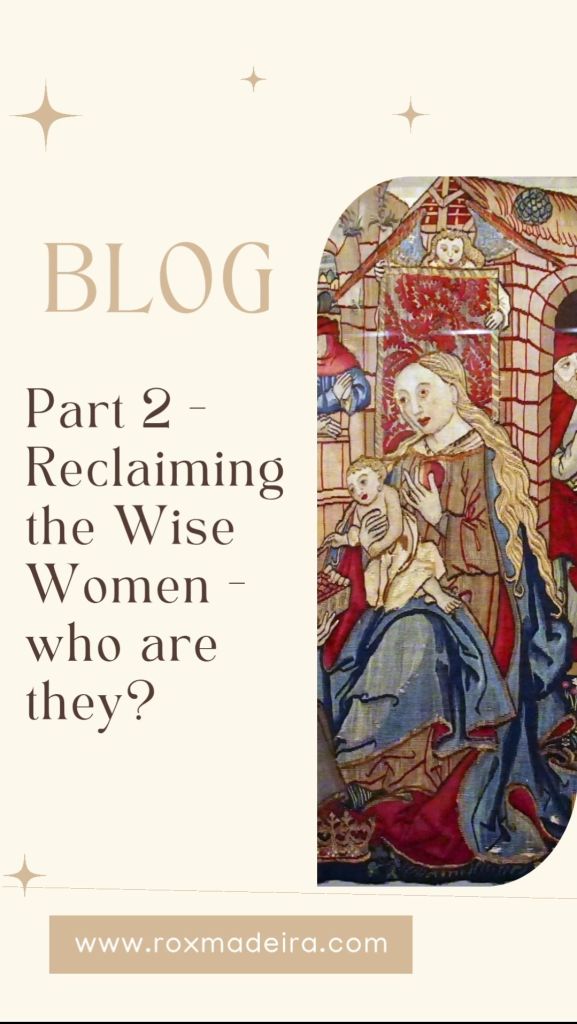
My work within Wise Herbal Ways is aimed at reclaiming the Wise Woman, but who is this woman? And why would we want to reclaim her?
The Wise Woman can be thought of as a historical figure, an ancestor, and also as an archetype. She represents the wild woman within us, the fierce warrior who understands her place in society, who embodies her skills and knowledge. She is the Seer, who connects with and sees the spirit, energy, and consciousness in the life around us, and as such listens deeply to the beings around her to hear their messages. She is the medicine woman who works with her plant kin and her internal medicine to bring forth a change in the people around her. She is the rebel who stands up for the people and beings without a voice, who brings her medicine to fight systems of oppression and harm. She listens to her ancestral guides as she knows that she is stronger when supported by her council of elders, the clan mothers, who have greater knowledge of the unknown and inknowable, who have been revered for generations. She is the woman who knows that there is more to the world than meets the eye. She learns about her ancestral past to know her present, to remember that a different way is possible, that although there have been many centuries of programming and oppreasion that it doesn’t always need to be this way, that there was a time before when God was a woman, and a time when all beings were equal.
Historically, women would have been the keepers of medicine. It would have been knowledge passed on through the generations – the art of cooking and healing, recipes for food, and medicine passed on by mothers and neighbours. Traditionally, as women gathered plants, they spoke to them the reasons they were gathering, they listened to any songs or charms that the plants told them, they gave charms to their “patient” (their family member, friend, neighbour etc) as a way to bring the spirit and the physical together to heal. This is how we survived for generations, centuries. The traditional Wise Women Way was through healing by nourishing the body, using safe plants, often “weeds” found within their area. I am using the term Wise Women tradition to honour the many years of oppression women have experienced, and to acknowledge the fact that the majority of healing done accross the globe is still done by women in their homes. As patriarchy and capitalism developed, women were slowly pushed out of this role as the guilds of apothecaries, guilds of surgeons and barbers, and doctors emerged to take over and carve up the buisiness of healing. Women’s role in healing was not only diminished and eroded, but the propaganda of the day eventually rebranded women folk healers as dangerous in their lack of knowledge, as quacks, and not to be trusted with healing. Their knowledge eventually became dismissed as “old wives’ tales.” The heroic medicine included more emphasis on things that could poison the body if used in high doses, on exotic ingredients, blood letting and purging. The scientific method of today is an extension of heroic medicine (but I can go into the 3 traditions of healing idea in another blog). This campaign was so successful that this mistrust has continued to this day as society still views herbal remedies (the main physical healing medicine of domestic healers) as ineffective and inferior to pharmaceutical medicine.
Centuries later, this campaign continued when cooking food was successfully moved out of many western homes and was handed over to companies to industrially produce food in huge commercial “kitchens” as “convenience” foods were created under the idea that it enabled women to go out to work. At this point in time, we have got to a point where some adults can say that they have never cooked a meal, something utterly unthinkable to our ancestors. Unfortunately, many of these ‘foods’ are made in ways and with ingredients unrecognisable in a normal kitchen and to the body itself. The various food manufacturers and industry experts have also managed to make food and eating so complex with various fads, diets, do’s and don’ts that we no longer know how to feed ourselves leaving us entirely at their mercy.
And so within the membership and circles, we work on awakening these different aspects. We journey to the medicine house to sit with our ancestors, we learn about our history to understand how we got where we are, within this we look at womens history, medicine, patriarchy, capitalism, empire, race and religion. We work with shifting our consciousness to connect with plant consciousness, the land, and spirits. We connect with the cycles of life, moon, and seasons, through rituals and ceremonies, and we develop our abilities to create sacred medicines and food as medicine, bringing the magic back into our daily lives.
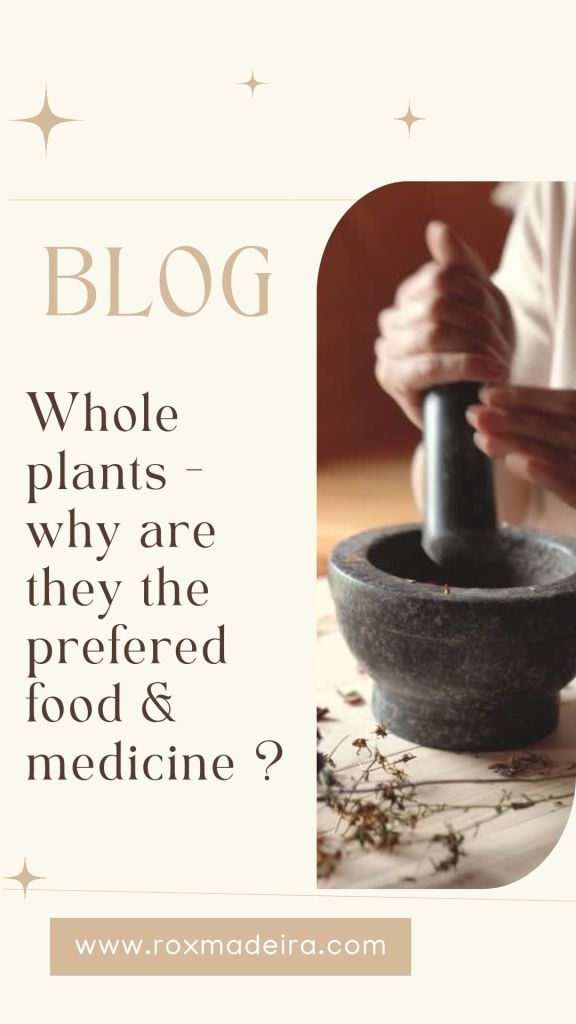
We have evolved together with plants. Our bodies, our nervous system, our brains need the chemicals in plants as these chemicals are what we are literally made of, they are needed for our body to function properly, our microbiome also feed on them and they constitute the majority of our physical body. Plants contain thousands of chemicals, which work synergistically together and are the reason that each plant might have so many seemingly different effects on us. Science looks at plants and isolates certain chemicals, for example, curcumin in turmeric. The researchers examine these chemicals on their own without all the other thousand chemicals they usually work alongside. They decide that they are effective or not outside of their normal state. These individual plant chemicals are then used as supplements or added into our food, for example, in cereals. Out of context, the chemicals may work differently. The body isn’t used to seeing these chemicals in this way, and so may respond in a different way than expected, perhaps with side effects. Many of these chemicals are also studied on mice, which aren’t humans. Plants are more than their individual parts.
This is, however, also the way that we have studied the human body. An example is the fascia. For decades, scientists simply scraped off the fascia from around all the organs and disguarded it as something not important. However, once antaomists began to look at the fascia as a part of the body that might do something, they obviously found that it was a vital part of the whole body. Nothing in the body of humans or plants is there for no reason. It all works synergistically.
This is one of the many reasons why processed foods – foods that have been taken apart, stipped, reformed, and had individual synthetic nutrients added are not recognised in the body in the same way as real whole foods.
There is no way to double blind study to measure how these thousands of plant chemicals interact with the body. This is why empirical evidence gained from centuries of people having used the plant and our own lived experience are the only ways to really know if a plant works for any person.
Plants have evolved with us and are conscious of the relationship that we have with them. We could think of them as our ancestors or as at extension of our bodies beause our bodies cannot live for long functioning well without them.
The flavour, taste, and smell of the food you take are part of the medicine. It is a way for the body to prepare itself to assimilate it. It connects us to the earth.
So we need whole medicine, whole plants, whole foods.
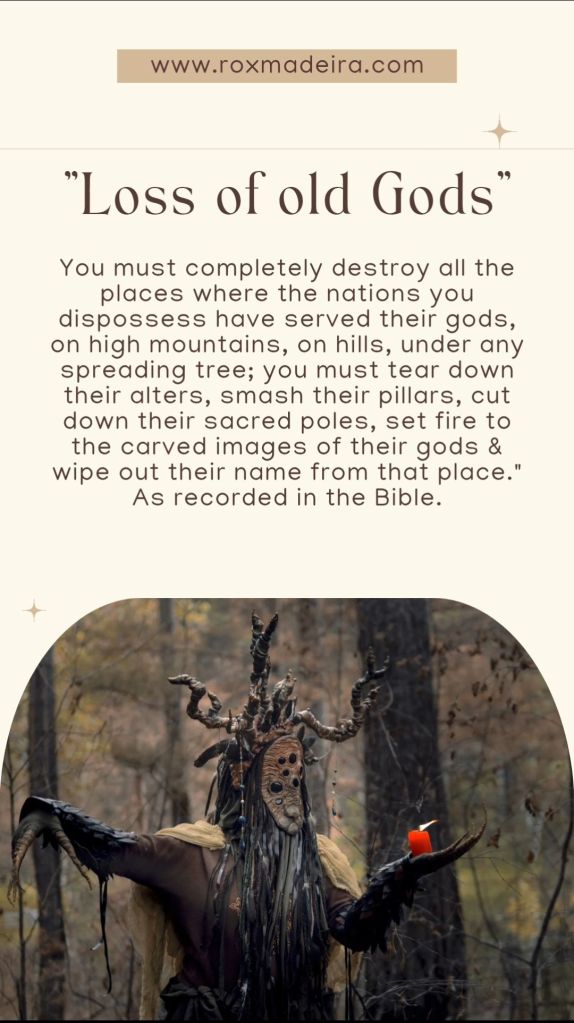
I was surprised to hear someone say that the fact that there were statues of female dieties discovered that pre-dated Jesus blew their mind, my mind was blown to find out that people believed that there was nothing before Christ, and yet this quote from the bible more or less sums it up. It explains why it is so hard for us to find pre-Christian gods and goddesses and ways of worship in Britain, it explians how imperialism extended across the world and why it tried to destroy everything in its path, it explains why we live in a world so completely detached from community and the natural world, devoid of soul and our own sense of belonging and ownership.
This is what we are trying to recover in the Weaving the Feminine seasonal circles and ancestral herbalism online membership, piece by piece, connection by connection.
Would you ever consider having trepanation – drilling a hole in your head – to relieve your headache? Not a regular, run-of-the-mill treatment for headaches even in the 1600s, but nonetheless a treatment that some people resorted to when nothing else helped. And amazingly, there are some records of people suggesting it worked for them! As you can imagine, trepanation was a dangerous surgery and involved using a circular saw in a variety of sizes to create a larger or smaller hole. These holes could then be used to apply medicine directly to the brain!
More often than not though, headaches were treated with herbs, spices, resins, breastmilk, garden worms, doves dung, vinegar, and foods. These could be mashed up and applied to fabric to make a poltice for the head and temples or herbs sewn into cloth caps, which could be worn on the head. Sometimes, it was suggested to use a herbal snuff made of Betony or Rue or steep herbs in wine or mead and to have a nip as needed.
There are a lot of herbs that have traditionally been used to ease a headache, including meadowsweet, willow, mint, rose, chamomile, rosemary, thyme, and marjoram.
Some examples of recipes used:
– A handful of daisy’s mixed with 12 earth worms and an egg white spread on a cloth to place on the forehead and temples.
– Marjoram tea
– Chewing poppy seeds or steeping them in brandy. Poppy was especially known in some areas for hangover headaches and called headache flower. The opium poppy was used in ‘official medicine’ whilst folk medicine used field poppies.
– Chewing willowbark
– Thyme was recommended for headaches by folk and ‘official medicine’.
By the 19th century, women were thought of as frail and weak and that any overstimulation could lead to many brain issues, including headaches. Wandering wombs mnstruation, over indulgence, and an imbalance of the temperments or humours were other reasons considered.
Even today, we are not entirely certain why some headaches and migraines occur. We have also developed research and have centuries of empirical research that supports the use of using many of the herbs. Plants such as meadowsweet and willow, for example, became the basis for asprin when the salicin within them was found by science to be pain relievering with anti-inflammatory properties. This chemical was then extracted to create the white pill we know today. Potentially, it is more potent, but it also comes with various side effects. So, although there are some remedies that we might think of as strange today, there are many that have been proven as effective.
.
.
Disclaimer: Nothing in this article is meant as medical advice or for people to try.
Today, on World Social Justice day, in the podcast I am speaking with Karen Gevirtz the author of THE APOTHECARY’S WIFE: The Hidden History of Medicine and How it Became a Commodity A ground-breaking genealogy of for-profit healthcare and an urgent reminder that cantering women’s history offers vital opportunities for shaping the future.


 Rox Madeira