In today’s podcast I am speaking with Sara from Habobas house about her charity work setting up Habobas House, which supports the rebuilding of homes in Sudan, and about Sudanese culture. It is really nice warming episode, so please enjoy, and support her work if you can.
We speak about foraging, The Wild Biome Project, Natasha’s new book and the National Institute of Medical Herbalists UK. Natasha’s book Foraged Condiments is available through Aeon. They have given podcast listeners a discount using the code NL20 available until 22/11/25.
If you enjoyed the podcast please like, share and subscribe.
You can connect with Natasha on Instagram @
You can connect with me and my work on my website and support the podcast HERE
My work as a community herbalist with Movement in Thyme CIC sees me working with disadvantaged communities and people seeking sanctuary. We run workshops empowering people to help themselves with herbal remedies at a time when the medical system seems overburdened and adverts on the radio advise patients to treat themselves at home before attending the hospital. This is all well and good, but the NHS has become a victim of its own success. Don’t get me wrong, I am a big proponent of the NHS, I think it is a testament to the social support of our country, and hate to think of Britain’s health service being carved off and privatised following along the lines of America, where only money talks. Being an herbalist does not mean that I am opposed to medicine and its advancement, on the contrary, the advancements we have made have been amazing and saved many lives. However, the rise of the medical establishment has also corresponded with the demise of our own capabilities and beliefs to heal ourselves. As medicines have taken over, we have been told that the remedies, once passed on mother to daughter, are more or less useless, and so many have been forgotten. Life has a cyclical way, though, and our present doctors are beginning to tell people to use things like honey for a cough. We are slowly beginning to realise that home remedies had some merit, that they had their place and their use, and that in this day and age with overstretched doctors and disrupted supplies of medicine that they may even be essential once again.
If we look at the history of medicine, particularly the role of folk medicine – medicine used in the house mostly by women – herbs were the main ingredients. Herbs were also the mainstay of much of what became authorised medicine, with plants being an ingredient within much of the chemical medicines the apothecaries made. Even to this day, much of our medicine started off its life as a component part of a plant, which was then isolated and recreated in a chemical format.
It is comforting to imagine that herbs were the only ingredients of folk remedies, but when we look back through time, they weren’t the only ingredients used. Dung, snails, frogs, fried mice, spider webs, wood lice, dirty socks, unicorn, powdered mummy, red thread, and breast milk were just some of the other ingredients used in home and practitioner remedies. Now we have a slight disgust for these ingredients in medicine, having moved so far away from them and from nature in general, but its also not wise to completely dismiss them all. There have, in recent years, been scientific research done on the efficacy of some old remedies, and some of these have been shown to be effective, that is not to say that you should go around collecting dried sheeps dung and start making your own remedies with them. However, if you travel to other countries, which we have in our “glory of empire” days termed “backwards” or “savage” you may find that some of these ingredients are still being used.
An ancient remedy, for example, in Traditional Persian Medicine, is dung from a female donkey, called “Anbarnesa,”which is smoked like incense for conditions like bronchitis, ulcers and ear infections. Scientific studies are now being done, which show the surprising benefits of it.
Then there were also the charms, which were an important part of remedies. These days, people often look at them in disbelief. “How could they believe in magic?” But if we look at charms and spells using modern terminology as ‘positive intentions’ or ‘positive mindset’, we see them in a different light.
Research shows that mindset or expectations to heal, similar to placebos, can trigger specific neurobiological correlates including the immune, cardiovascular, and neuroendocrine systems. In fact, placebos are driven in large part by the mindset that the pill is effective.
The research also shows that medicines are more effective when the physician tells the patient the benefits of it before or while administering it. We are just finding this out now, although if we look, healers knew this through history.
The greatest sanction which the Romans used against dissidents was to brand them as magicians and sorcerers, for which the penalty was death. Women healers often met this fate. Caligula’s insanity was attributed to drugs and magic used against him by his wife, and she was executed. The early Christians were similarly branded as magicians and executed, and it is no coincidence that some of the early Christian martyrs, like Theodosia, Nicerata and Thekla were principally sagae or midwives….The conversion of the Roman empire to Christianity crystallised attitudes towards women and women healers….Thus men were confirmed in their role as official healer and Galenic medicine – the most prominent Roman medical ‘school’ – was confirmed as Christian medicine…..For the poor had little choice but to continue with home remedies and unorthodox practitioners. This duality of medical practice remained a feature of European medicine until the twentieth century.
This duality existed despite the fact that the church and male physicians sort to discredit women healers. Part of the reason women healers and domestic medicine continued was the fact that they helped the poor, their neighbours, their family, and the community. Doctors, on the other hand, charged large amounts of money for their services and so were out of reach for the majority of people. There were also not enough doctors to doctor everyone, and the majority of doctors did not want to work with the poor anyway. Normal people, on the whole, thus continued as they always had looking after themselves using domestic medicine, things they could find in their houses, in the hedgerow, or could be grown in the garden. There are numerous recipt books from upper-class women who were able to read and write, which shows the role of women as healers of their households. They also show how women shared this knowledge and passed it on between them.
This then brings us back to my original point, that we have lost this knowledge and yet have come full circle where it is needed once again. We need to look back at our history to find what we have lost and bring this teaching to people so that we can look after ourselves for basic needs and don’t “clog up the hospitals unnecessarily.” And it is the everyday person yet again who needs this knowledge as the upper classes are as usual less affected.
As a historical herbalist, my role is to uncover the traditions of our past, preserve our knowledge, and ensure that our wise women, our grandmothers, and their struggles, are not forgotten. When we see what seems to be happening in the States with what appears to be the reversal of democracy, womens liberation, and the rise of Christian nationalism we can see the circle of history repeated, even as they try to delete it. In these times of uncertainty, the knowledge that kept us alive for millennia seems ever more important.
But why dress in historical clothes? As historical herbalists, our aim is to practice living history. Recreating the clothes and techniques of the era to help us to better understand how people might have thought or felt, what the challenges were, and how they practised healing. And it’s fun!
To take a few obvious examples: communities speak languages that are inherited from the past. They live in societies with complex cultures, traditions and religions that have not been created on the spur of the moment. People use technologies that they have not themselves invented. And each individual is born with a personal variant of an inherited genetic template, known as the genome, which has evolved during the entire life-span of the human species.
So understanding the linkages between past and present is absolutely basic for a good understanding of the condition of being human. That, in a nutshell, is why History matters. It is not just ‘useful’, it is essential.
The study of the past is essential for ‘rooting’ people in time. And why should that matter? The answer is that people who feel themselves to be rootless live rootless lives, often causing a lot of damage to themselves and others in the process.
I guess in essence this blog post is me trying to connect my two roles as community herbalist and historical herbalists, which can on the face of it be two very different roles, but are in fact two sides of the same coin. Rooting myself in the knowledge of the past helps me to see the cycles that are being repeated, and equally helps me to help marginalised communities just as our grandmothers (and some grandfathers) before us always have.
Movement in Thyme is a non-profit you can find more about our work and support us here: https://movementinthyme.com/
In todays podcast I am speaking with Agnieszka Drabek-Prime from Prime Therapy
She is a medicine women and sacred womb weaver. We speak about how and why to connect with the womb, the cycles in life and the archetypes.
You can connect with her at her website (above) or on instagram @ Yoni.Wise
You can buy her new book Dancing with Goddesses at Aeon, with this discount code DWG20 until 8/11/25
I am looking forward to weaving in some of Agnieszkas womb meditations into Weaving the Feminine, you can find that and support the podcast at Wise Herbal Ways
In the last patreon post on the Wise Herbal Ways weaving the feminine path, we looked at the archaeological remains of an Anglo-Saxon woman who has been described as a wise or cunning woman. Wise women would have had great power and healing skills to help the community and animals. They would have mediated between the people and the spirits, been midwives and therapists. As Christianity and the state became more powerful, their role in society was inverted, and they became painted as witches, spreading illness, making animals infertile, spoiling milk, stealing, killing, and encouraging unnatural sexual acts.
This subversion of their role has had many consequences, one of which is that we question and query any finds that even suggest that a wise women may have been a healer and physician and may have been found within Anglo-Saxon and Viking Britain doing good work. The victorian archaeologists also had a huge role to play in this as they viewed all their finds through a patriarchal lense, and so only men were considered to have been capable of being physicians. In this way, history and our view of society in the past can be changed. Despite this narrative, many women have an inate knowing that there were medicine women in tribes and families, and they often find that they identify with the witch.
We often look back at the past and wonder how any of this could happen, and yet we see what is slowly happening in America. Christian nationalists, technocrats, and the oligarchy appear to be trying to take us back to this past. The rise in the tradwife who glorifies, on social media, being the perfect stay at home wife and mother pushing this agenda, the increasingly alarming laws that seem to be taking women’s freedoms, body autonomy, and rolling back centuries. From the UK, we watch, amazed, that all this is happening to a supposedly democratic, free country, and yet we worry that that is what is also heading our way. We look back at the history of the witches, and we have been left with the scar of their persecution, every halloween we are reminded that they were ugly women, with warts on their faces and an evil cackle; a warning that women were persecuted for their speech, their views, their disobedience of male society. And we find ourselves wondering if this fate awaits us yet again.
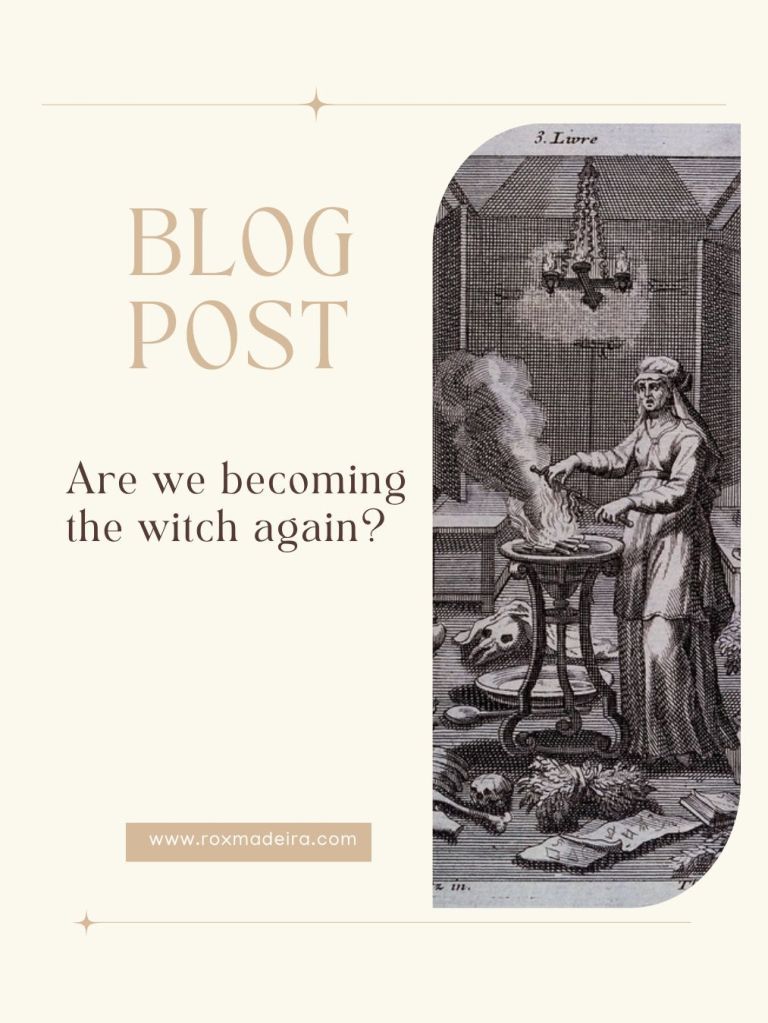
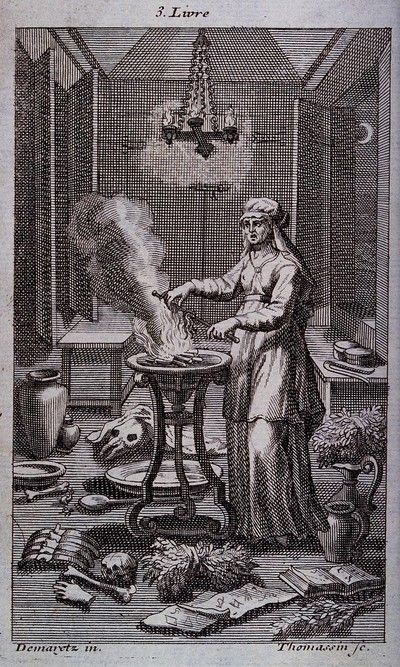
Image: A witch casting spells over a steaming cauldron. Engraving by H.S. Thomassin after Demaretz.
The guide is packed with growing tips and inspiration for cultivating your very own witching herb garden, featuring some of our favourite plant allies like Henbane, Datura, and Belladonna.
It’s perfect for anyone looking to deepen their relationship with these powerful, often misunderstood plants.
Please support the podcast by liking, sharing and subscribing and consider donating a little to helping it run, you can do that HERE
In todays podcast my new co-host Ruth Glasgow and I are speaking with Rabbi E Beck an Orthodox Jewish Rabbi from Neturei Karta International. Neturei Karta International is a community of activists representing many Jews worldwide who stand up for and promote traditional Judaism in opposition to the philosophy of Zionism and due to religious beliefs. In their own words: “Neturei Karta is dedicated to educating the world and being the voice of the original Jewish religion as it was practiced before Zionism and continues to be practiced by multitudes of Orthodox Jews worldwide. We emphasize Jewish condemnation of the occupation of Palestine and the oppression of its people.”
The podcast is fairly long, but we hope you learn a lot from it. Don’t forget you can support the War Doctors in Gaza obtain medical supplies HERE
If you enjoy the podcast please like, share, and subscribe. And if you would like to support the podcast to enable it to continue you can do so HERE
You can support any of the people on the podcast HERE
Spirituality and ancestral wisdom has always told us that our ancestors were important and that it was necessary for us to honour them and not forget them and what happened to them. Science is as usual catching up and showing us some reasons why its important to know what happened to our ancestors and how things that happened in their lifetime can influence ours even if we are generations apart.
Yet again, colonial leaders and occupiers are using starvation and forced famine as a tool against civilians in multiple countries. Our greed, our blindsightedness, and our will for revenge, thinking only we as the oppressors have the right to survive. The current powers that be are so enraged and soaked in blood that they are unable to stop and see the humanity before them, they are unable to see the disasterous consequences of their actions for the immediate generation (whom they obviously do not care about) but also for future generations. The trauma of starvation and genocide results in more traumatised people in the world for generations to come. Will we never learn?
Various animal and human experiments have recently proved through the new science of epigenetics that famine endured by our ancestors, generations before we were even alive, can have massive transgenerational impacts on future generations with significant effects on health, disease risk, changes to RNA, and overall longevity.
The quotes below are from different studies in different parts of the world. Firstly, South Asia (Bengal) where during the 18th and 19th century under British rule they survived at least 31 famines, and now they have 3-5x more insisdence of diabetes than white folk who weren’t exposed to as many serious induced famines. Secondly, a remote isolated area of Sweden, where the famine was a result of failed harvests and showed a suprising benefit to grandsons. An interesting comparative study from Swedish Uppsala research noted a difference in health outcomes based on gender. In particular, it was interesting that in the Uppsala study it showed that women’s health was affected by their paternal grandmothers! So it just goes to show that our grandmother lines on both sides have a huge influence on us. Forth, the Chinese faminine in 1959 was regarded as one of the deadliest man-made disasters. The final research was inspired by the Dutch famine during the second world war, looked at ringworms and their effects on RNA. This final study was carried out by Israeli researchers.
The depressing fact is that this acquired inheritance for any future generations born from those who are miraculously able to survive the horrors in famine-striken Palestine and Sudan are destined for health problems. The effects of famine are transgenerational, and so they will have an impact for decades to come. But we as humans never think this far ahead. And if this is the goal, we are truly in sadisic territory.
There can be no peace in the world if we keep repeating the same atrocities.
“Dr Syed explains that South Asians, having endured numerous famines, have inherited “starvation-adapted” traits. These traits are characterised by increased fat storage. As a result, the risk of cardiovascular diseases, diabetes, and obesity is heightened in their descendants. This tendency towards fat storage is believed to be closely tied to epigenetic factors, which play a crucial role in how these traits are passed down through generations.” (1)
“Among the 1905 birth cohort, those who were grandsons of Överkalix boys who had experienced a “feast” season when they were just pre-puberty—a time when sperm cells are maturing—died on average six years earlier than the grandsons of Överkalix boys who had been exposed to a famine season during the same pre-puberty window, and often of diabetes. When a statistical model controlled for socioeconomic factors, the difference in lifespan became 32 years, all dependent simply on whether a boy’s grandfather had experienced one single season of starvation or gluttony just before puberty.” (2)
“These results were surprising considering that in clear contrast, maternal malnutrition during mid-childhood was linked to increased granddaughters’ cardiovascular mortality. The Uppsala birth cohort multigeneration study (UBCos Multigen), based on much larger Swedish population data set than the Överkalix cohort, confirmed that paternal grandfather’s food access in pre-puberty predicts grandsons’, but not granddaughters all-cause and cancer mortality…Hence, in the second-offspring generation, it appears that the mortality rate of men was linked exclusively to their paternal grandfather’s food supply during the prepubertal slow growth period, whereas the mortality rate of women was associated instead to the food supply of their paternal grandmothers, suggesting a sex-specific transgenerational response to starvation during mid-childhood, operating through a paternal line. Evidence from human famines, as well as animal studies indicates that nutrient starvation affect the health and lifespan of the famished individuals as well as their progeny. However, these studies also indicate that these effects depend on (1) the sex of both the individuals exposed to nutrient deprivations as well as the sex of the offspring and (2) the time of hunger exposure, prenatal (in utero) versus postnatal exposure to nutrient deprivations.” (3)
“Evidence suggests that the nutritional status during fetal development, reflection of the maternal diet during pregnancy, leads to health outcomes not only on a person as an adult but also on their offspring” (3)
“A famine that afflicted China between 1959 and 1961 is associated with an increased hyperglycemia risk not only among people who were born then, but also among the children they had a generation later….Some of the studied offspring were born to two, one or no parents who had been famine-exposed.” (4)
“A new study, involving roundworms, shows that starvation induces specific changes in so-called small RNAs and that these changes are inherited through at least three consecutive generations, apparently without any DNA involvement…..In other words, something that happened to one generation, whether famine or some other traumatic event, may be relevant to the health of its descendants for generations.” (5)
This episode is part of the Palestine Series in solidarity with Palestine and made in association with Ruth Glasgow from The Justice Nook whose aim is to share knowledge for action.
We are speaking with Dr Mosab and Dr Malak who are 2 Gazan doctors currently struggling to help their people in Gaza. You can follow them on instagram @war_doctors2024
You can support their fundraiser for medical supplies HERE



 Rox Madeira